

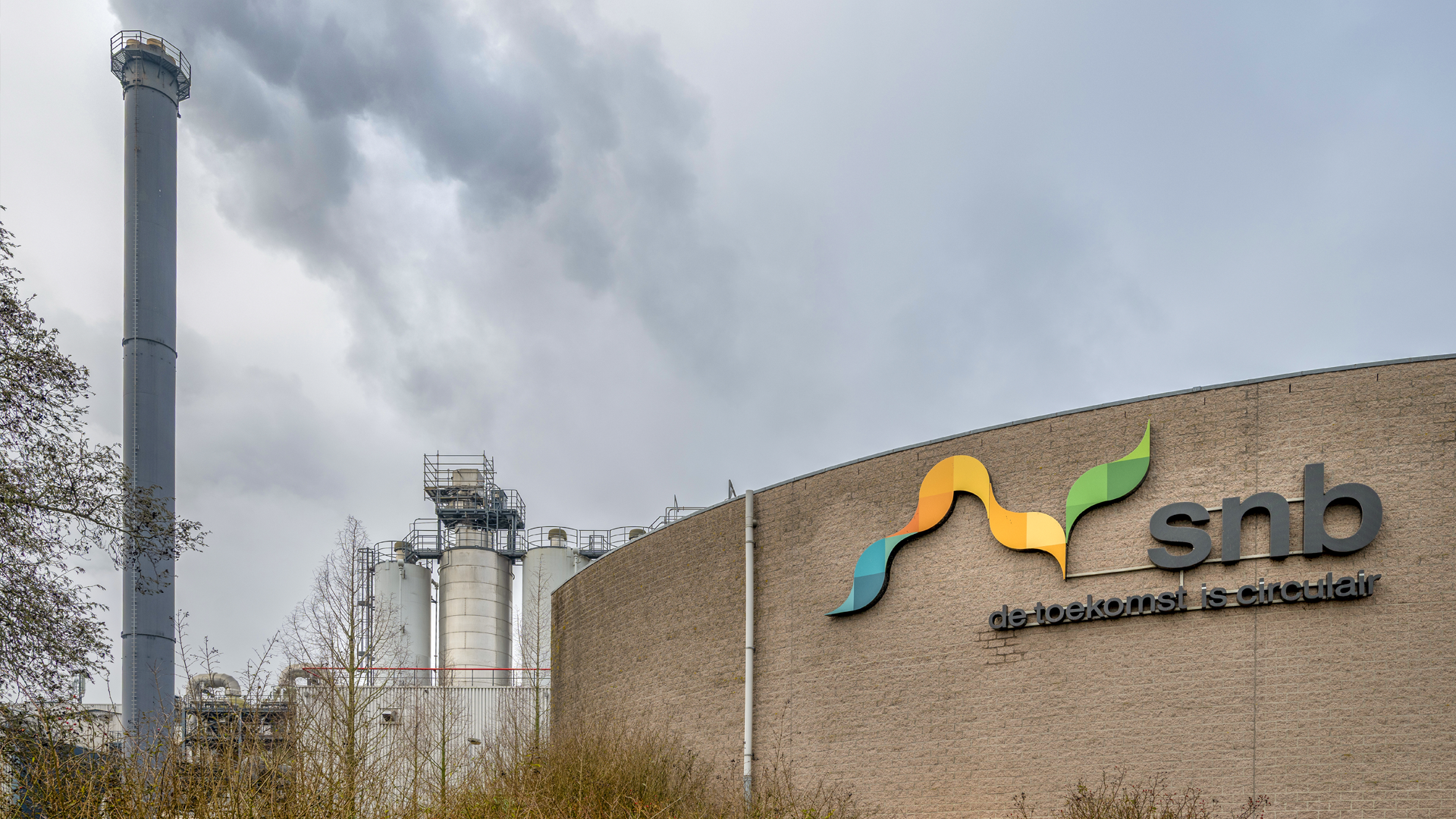
SNB, founded in 1997, is one of the largest sewage sludge processing companies in Europe. The company processes sludge from wastewater treatment plants across a large part of the Netherlands. Every day, 50 to 60 trucks arrive to unload their loads.
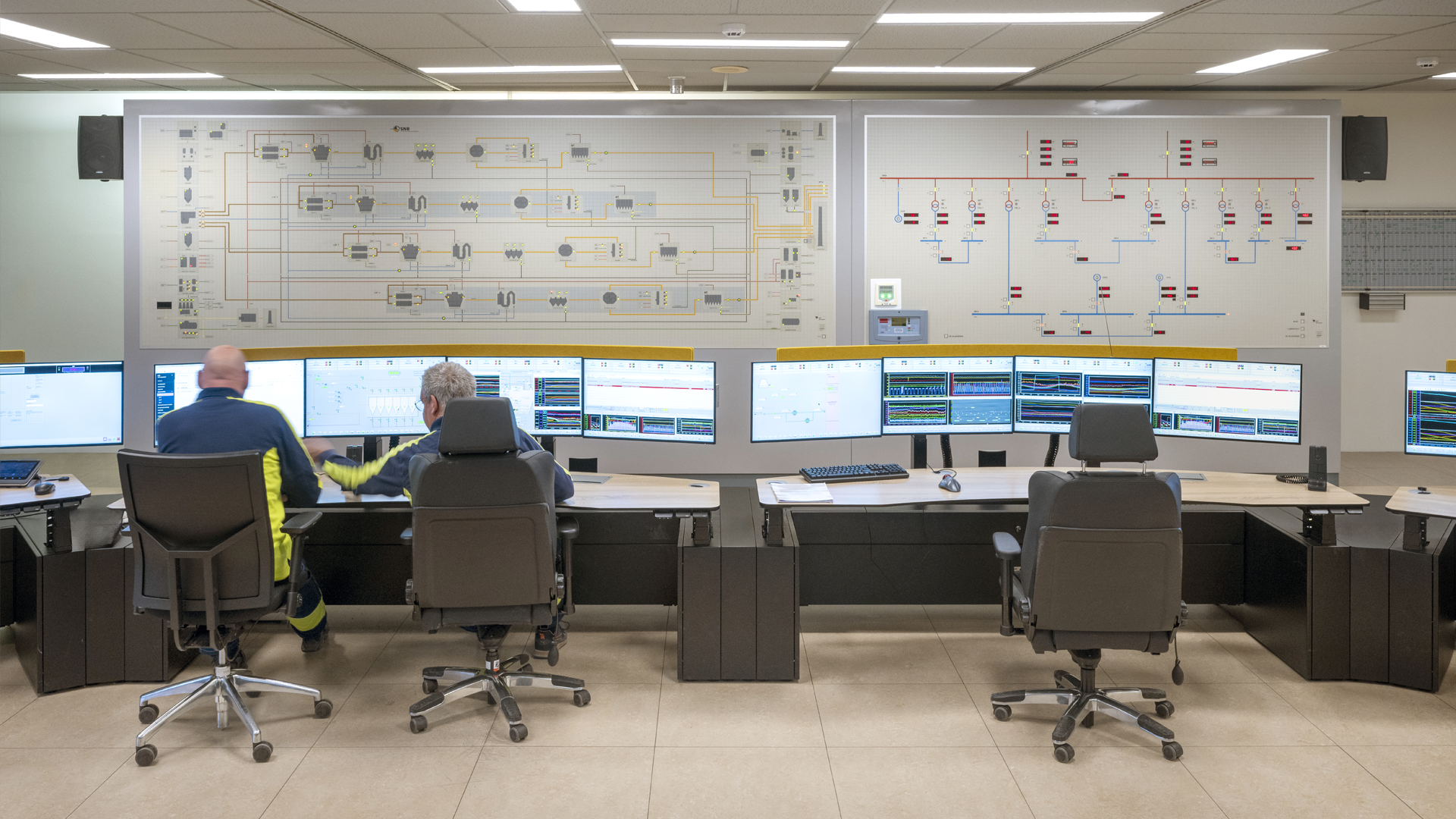
Within the facility, the sludge is processed across four identical processing lines. The process is designed to recover energy from sewage sludge, while the residual materials are reused as secondary raw materials. Operations run 24/7. During each shift, at least two operators are stationed in the control room, while other operators work within the plant to resolve malfunctions or deviations.
From the control room, the entire process is monitored and adjusted where necessary. As director Silvester Bombeeck summarises: “The control room is and remains the heart of our operation.”
Evolving standards and the need for flexibility
The existing control room had operated reliably for many years. However, after more than 25 years, it no longer fully aligned with current standards for ergonomics and workplace design. The number of workstations and their fixed configuration no longer matched the way work is organised today. From a visual perspective, the time had come to modernise the space and better reflect SNB’s professional and forward-looking ambitions.
In a 24/7 environment, where multiple operators use the same workstations across different shifts, the need for greater flexibility and ergonomic support became increasingly evident.
As Bombeeck explains: “The most important improvement is that each workstation can now be fully adjusted to the operator behind the panel. That was not possible in the previous control room.”
Working together towards a well-considered design
Prior to implementation, the design process was handled carefully. CREON actively contributed ideas regarding the layout and optimal use of the space. Drawings were exchanged several times until the design fully met SNB’s requirements and expectations.
Communication throughout the project was smooth. According to management, the decisive factor in selecting CREON was the combination of competitive pricing and confidence in CREON’s approach and working method.
Equally important was the involvement of the operators. Multiple shift teams were consulted before final decisions were made. This was not a formality, but a deliberate choice. “It is very important to involve operators, because they are the ones who work with it every day,” Bombeeck states.
Implementation without interrupting operations
The renovation of the control room took several months. For one month, operations were temporarily relocated to an adjacent room. This allowed the new flooring to be installed and the new workstations to be implemented safely and efficiently without shutting down the primary process.
Operational continuity was maintained at all times, a crucial condition in a 24/7 production environment like this.
Four SPLIT workstations and two personal video walls
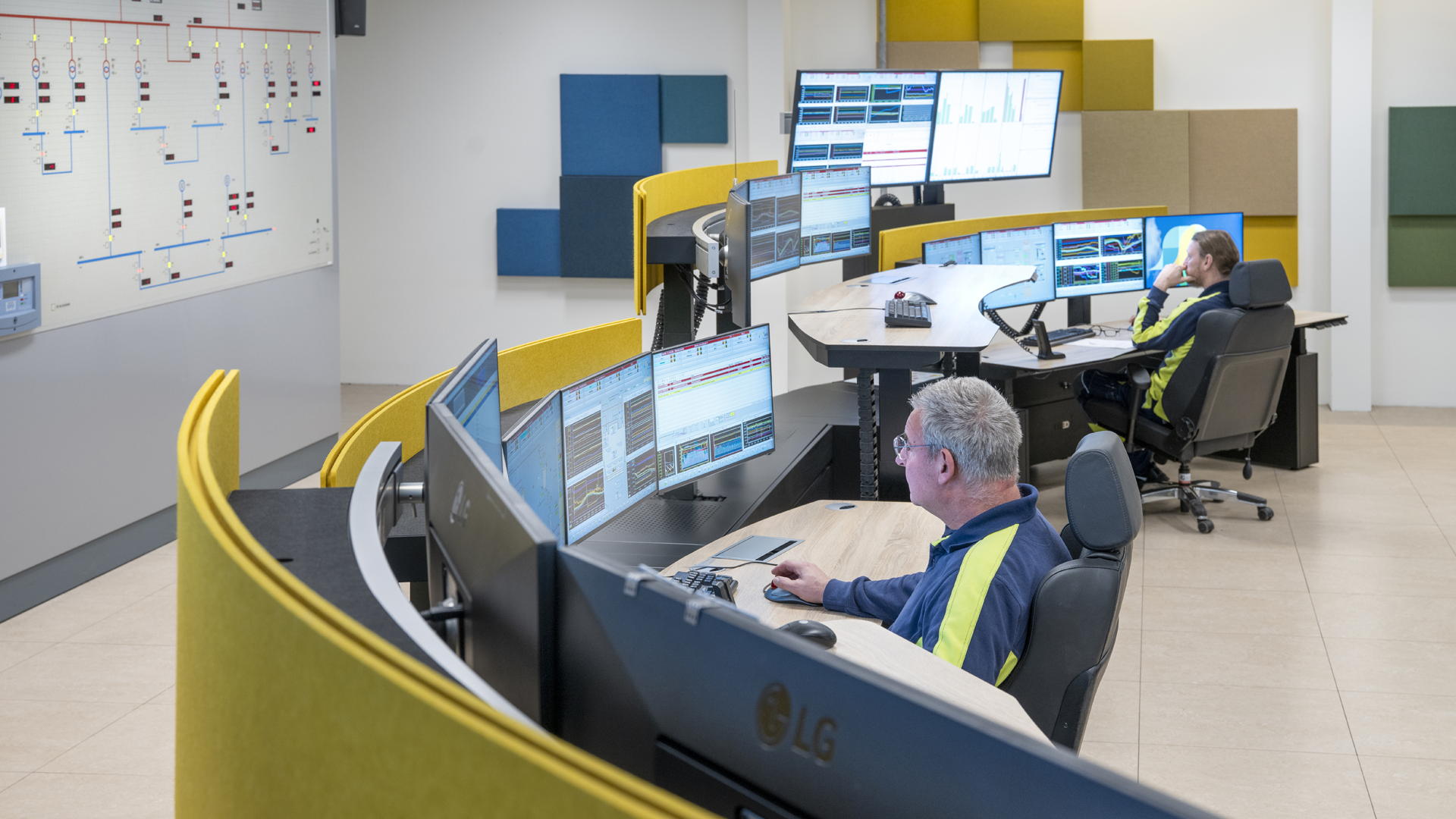
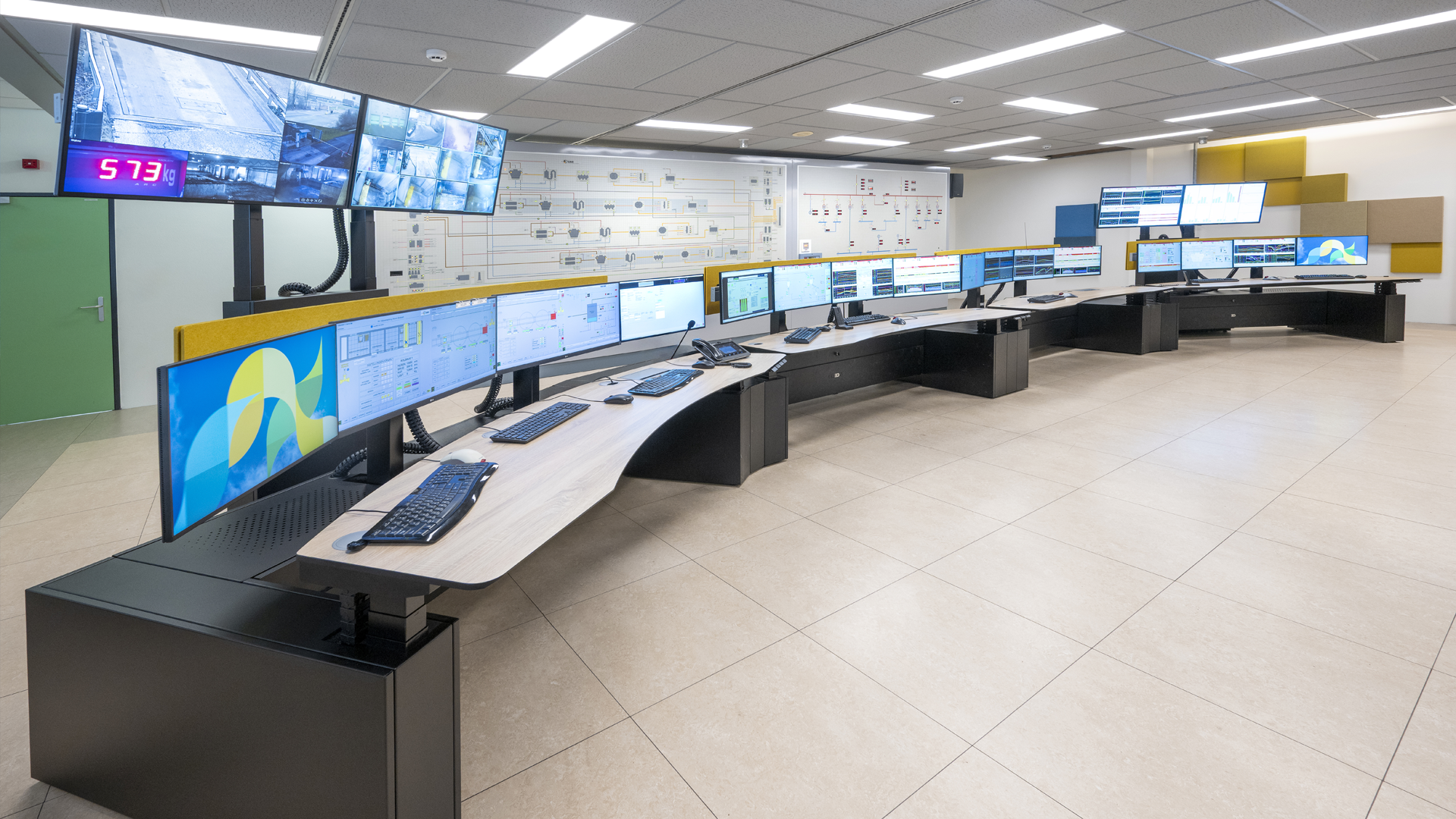
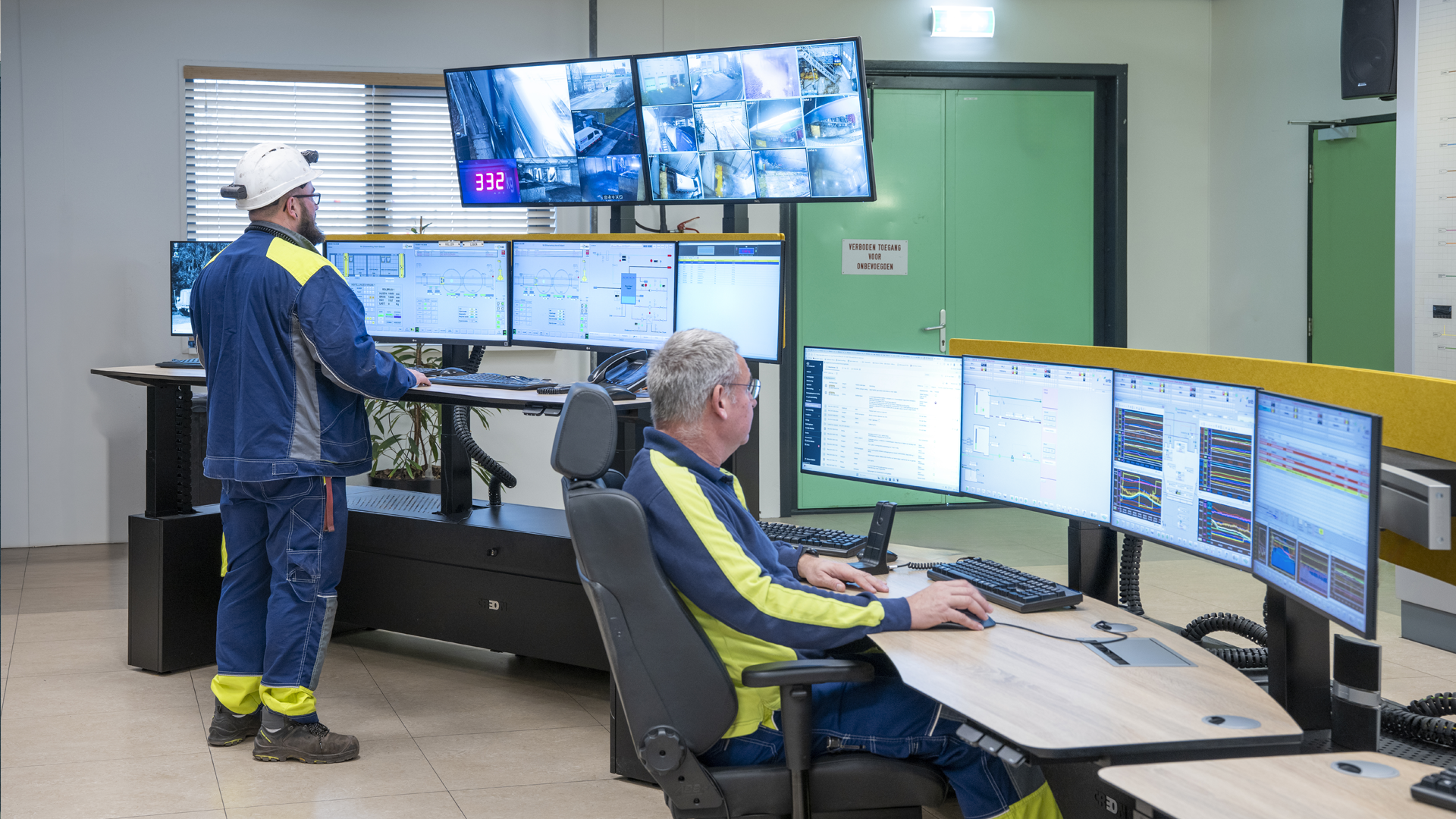
CREON supplied four SPLIT workstations, designed for intensive 24/7 use. The work surfaces and monitor arms are electrically adjustable in height and depth, independently from each other. This allows each operator to tailor the workstation precisely to their body posture and personal preference.
The sit-stand functionality is actively used. Operators indicate that they regularly alternate between sitting and standing. Extended periods of seated work, often in a relaxed posture, are balanced with standing, contributing noticeably to comfort and alertness.
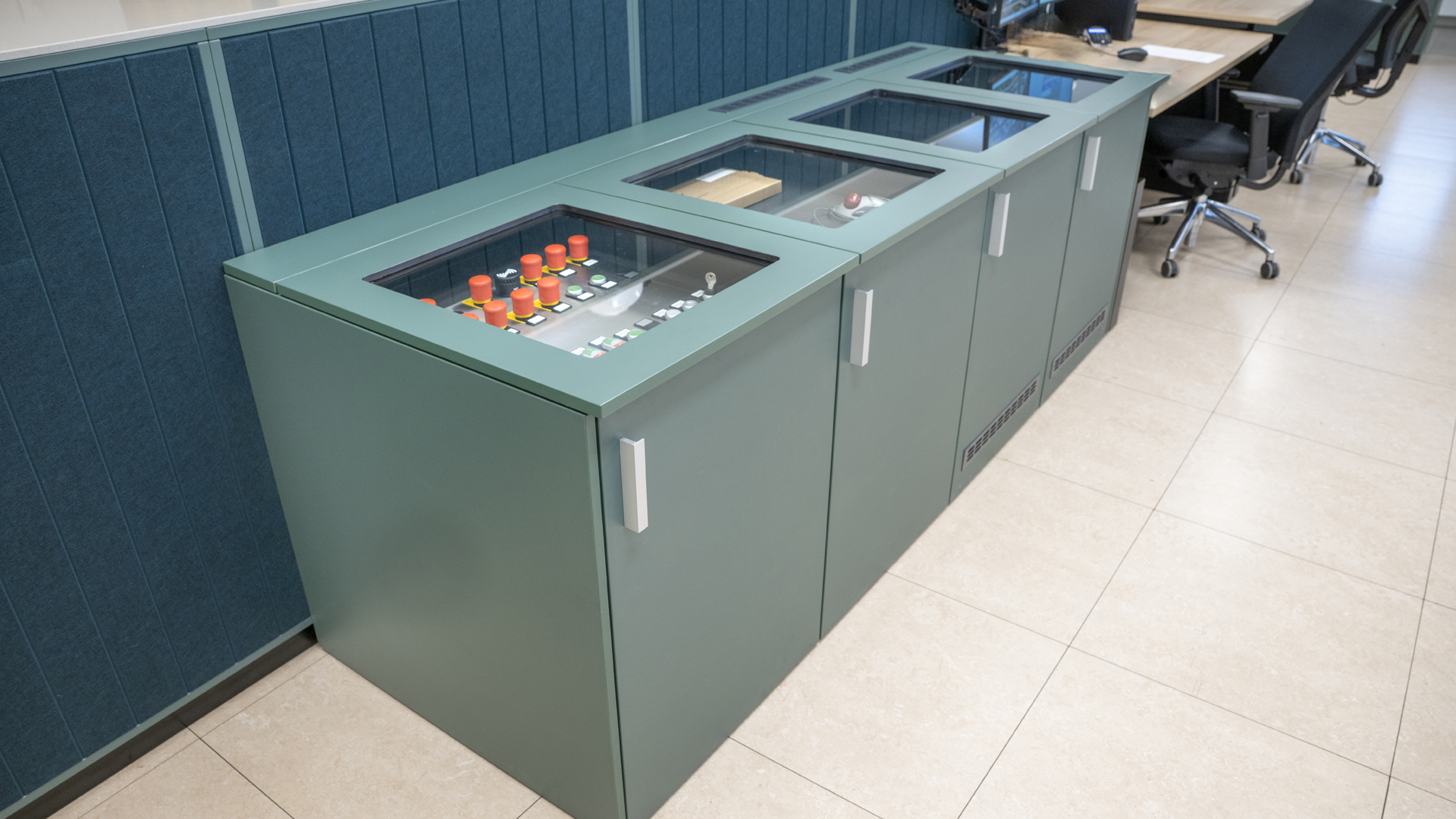
In addition to the workstations, two personal video walls were installed. These provide each operator with a clear overview of different parts of the process. CREON also delivered a custom-built cabinet for the printer, integrating the emergency stop panel. Functionality and safety are therefore logically and clearly incorporated into the control room layout.
Greater clarity, improved working environment
The renewed control room represents not only a technical improvement, but also a visual and spatial upgrade. New materials, plants and PET felt acoustic elements contribute to a calm and pleasant working environment.
Operators immediately notice the difference. The room feels more organised and professional. The adjustability of the workstations allows each user to experience the control room as their own workspace.
According to Bombeeck, the impact is clearly visible in daily practice: “A noticeable difference.”
Investing in people and process
With the renewed control room, SNB has invested not only in technology, but explicitly in the people who monitor the process day and night. Ergonomics, flexibility and ease of use contribute to sustainable employability and operational reliability.
The control room remains the heart of the operation. Now in an environment that is fully prepared for the future.